Categories
Press Releases

Is your city bike-friendly? Last call for 2023 Mobility Awards nominations

Is your city bike-friendly? Last call for 2023 Mobility Awards nominations

Quezon City—The Metropolitan Manila Development Authority (MMDA) has released the results of a year-long bike count done in 2022 by its Bike Lane Program Office (BLPO), with over 1.7 million bicycle trips made along Ortigas Avenue, Quirino Highway, and Commonwealth Avenue. The growing community of bikers has shown that cycling is a viable mode of transportation in the country.


“The MMDA confirms what we’ve been saying all along: that there is momentum for a mobility revolution—driven by clean, fossil fuel-free, noise-free vehicles powered by hardworking Filipinos,” added Aldrin Pelicano, ICSC’s Inclusive Mobility Advisor and founder of the online community MNL Moves.

“The [bike count] shows that truly, when we give space for people on bikes in our streets, they will choose cycling over driving motor vehicles. Not only does it help ease the constant pressure on our public transport but also contributes to reducing road congestion. The challenge now is to ensure the bike lanes are safe and connected for everyone to use and get them to their destinations.”

To keep the cycling momentum going, the Mobility Awards aims to recognize those who helped pave the road for more inclusive and sustainable mobility in the country. Nominations for this year’s Mobility Awards are open until September 7, the public is encouraged to nominate bike-friendly cities, workplaces, and establishments in the country in its final week.

The Mobility Awards is the first citizen-led, incentive-driven campaign encouraging the citizens, workers, and consumers to recognize cities, private companies, and employers who have taken measures towards better, safer, and more accessible mobility for the 88 percent of Filipino households who do not own cars.

Aldrin describes the Mobility Awards as an exercise in democracy. At its heart, the initiative is a call for Filipinos to take ownership of their rights, engage with governance, and appeal to their cities to improve conditions for urban mobility.

This year’s Awards is also open for individuals under the Padyak Power to the People! Awards, namely Siklista ng Bayan and Padyak Champion categories. In celebrating those who choose to cycle, these award titles humanize and put a face to the conversation on active transport, Aldrin adds. The stories of hardworking Filipinos serving their communities while experiencing firsthand the struggles of cycling in a car-centric urbanscape are as deserving of recognition.

For LGUs, workplaces, and establishments looking to make strides in their own bike-friendly practices, Aldrin advises starting small. The Mobility Awards is an opportunity to learn from nominees but even a simple bike rack encourages customers and staff to choose cycling as a sustainable mode of transport. Regular commuters, too, have a far-reaching influence in sharing their experiences of getting around on bike with others. As more and more people adopt urban mobility practices, it sets an example for the rest of the country to follow suit in a shared vision of better cities for all.

The Mobility Awards is jointly organized by the Institute for Climate and Sustainable Cities, MNL Moves, The Climate Reality Project Philippines, 350 Pilipinas, and Pinay Bike Commuter Community, in partnership with League of Cities Philippines and regional partners across the country.

The public can submit their nominations through mobilityawards.ph/nominate until September 7. The awardees will be announced in October in advance observance of World Cities’ Day.

Click here to learn more about this year’s nominations and categories for the Mobility Awards.

***

This article was written and originally published by Grid Magazine.


Categories
Press Releases

More Filipinos Are Cycling Now, Latest SWS Survey Affirms

More Filipinos Are Cycling Now, Latest SWS Survey Affirms

Quezon City—One out of three households in the country, amounting to approximately 10 million households nationwide, now own at least one bicycle, according to the latest survey released by the Social Weather Stations (SWS)

A significant increase from the past two years, with 7.3 million cyclists recorded in April 2022 and 6.2 million cyclists estimated in May 2021, the recent SWS findings highlight the growing reliance of many Filipinos on bicycles for transport, livelihood, and recreation. This year’s respondents cited economic benefits, health improvements, financial savings, and reduced travel time as their main reasons for cycling.

In response, Mobility Awards National Coordinator Arielle Celine Tabinga said:

The Metropolitan Manila Development Authority (MMDA) has already said that a bike revolution is underway. The latest SWS survey provides solid evidence that this movement is not only persisting but steadily gaining momentum. With Filipino citizens leading the change, our collective vision of a safer and more inclusive transportation system is clear. Bicycles are no longer confined as a recreational pastime; but instead have emerged as a dependable, healthy, affordable, and convenient mode of transportation for Filipinos.

While we are headed in the right direction, conditions are still far from optimal. We still have a lot of work to do, and we need all hands on deck to ensure that Filipinos are secure and comfortable in our streets and shared spaces across the country. We call on our leaders in the national and local governments – in particular, the MMDA, the Department of Public Works and Highways (DPWH), the Department of Transportation (DoTr), and city executives – to pave the way and work together to provide safe and interconnected infrastructures to cyclists, pedestrians, and commuters.

While the data proves that more Filipinos are cycling, the nomination period of this year’s Mobility Awards has shown that many citizens are concerned that current efforts are falling short. Despite the survey indicating a rising number of Filipino cyclists, there is a resounding sentiment among bicycle users that only a handful of cities, establishments, and workplaces are stepping up to the changing times. With this increase in cyclists must come the development of policies, programs, and infrastructure to prioritize active mobility and respond to bicycle commuters’ growing needs.

In the Mobility Awards’ final week of nominations, we continue to challenge lagging cities, businesses, and workplaces to heed the call of the significant number of Filipino bicycle users. Seize the opportunity to advance inclusive, responsive, and clean transport options in our cities, and the true rewards of good work come from citizens who benefit from and recognize your acts of leadership.”

The Mobility Awards is co-convened by the Institute for Climate and Sustainable Cities (ICSC),  The Climate Reality Project Philippines, 350 Pilipinas, MNL Moves, and Pinay Bike Commuter Community. Nominations are still open for this year’s installment, and will end on September 7. Visit https://www.mobilityawards.ph/ for more information.

***

CONTACT
Sanafe Marcelo, ICSC: media@icsc.ngo, +63968 886 3466, +63917 149 5649

Categories
Press Releases

Mobility Awards: Philippine cities must step up and prioritize people over cars

Mobility Awards: Philippine cities must step up and prioritize people over cars

Quezon City—Nearing the end of the nomination period for this year’s Mobility Awards, the awards’ convenors urge all cities in the Philippines – especially those who were previously recognized for their leadership in providing safer, more inclusive streets – to heed the call of the majority of Filipinos to prioritize the movement of people over cars.

On behalf of the Mobility Awards convenors, Institute for Climate and Sustainable Cities (ICSC) inclusive urban mobility advisor and MNL Moves founder Aldrin Pelicano said:

“The post-pandemic return to normalcy has unmasked a truth that we can not ignore: cycling is not the culprit behind traffic congestion; it is predominantly caused by our overdependence in driving motorized vehicles. As we envision a future where cities thrive with cleaner air, inclusive mobility, and enhanced livability, it is imperative that we prioritize reliable, clean, sustainable, and inclusive modes of transport.

“Recent decisions made by city governments, such as the removal of bollards in bicycle lanes, have raised serious concerns regarding the safety and well-being of cyclists and pedestrians in cities around the Philippines. The latest data from the Metropolitan Manila Development Authority (MMDA) clearly suggests that a growing community of cyclists is using our roads as everyday transport. The removal of safe passages for cyclists not only hampers their ability to move around, but also places them in greater danger. This contradicts the commitment and shared vision of the Mobility Awards and past city winners to supposedly prioritize the mobility needs of the majority and promote sustainable urban living. The decision to remove bollards must be met with stronger proactive measures to protect cyclists and pedestrians, such as implementing slower speed limits, observing safe space for non-motorists to prioritize access,  and allocating wider sidewalks for pedestrians. Unless these strategic measures are in place, abrupt removals of segregated bollards and other safety facilities endangers non-motorists on our roads.

“Cities that have previously stood out during the first and second year of the Mobility Awards for their commitment to people-centric mobility have an unparalleled opportunity to inspire and lead. In light of these developments, we urge cities, particularly those who have previously been recognized as Mobility Awards awardees, to step up and set a positive example by providing inclusive, cleaner transport options for hardworking Filipinos. 

“While we call on cities to step up, we also urge Filipinos to challenge your local leaders and governments. Nominate deserving and forward-looking cities, business establishments and workplaces, and demand others to level up their bicycle- and pedestrian-friendly initiatives. Cities should empower its people to move freely, conveniently, and safely, allowing citizens to become more productive and provide safely and generously for their families. Nominating your city for the Mobility Awards is more than just a recognition of your efforts – it is a commitment to a better, safer, and brighter future for all.”

The Mobility Awards, led by its convenors ICSC, The Climate Reality Project Philippines, 350 Pilipinas, MNL Moves, and Pinay Bike Commuter Community, also organized Bilang Siklista, a citizen-led national bicycle count held in major cities nationwide that aims to provide evidence-based justification for investing in better bicycle and pedestrian infrastructure. Results from this year’s count will be published on September 22.

Meanwhile, this year’s installment of the Mobility Awards will end its nomination period on September 7, and will announce the awardees for 2023 in October. Visit https://www.mobilityawards.ph/ for more information.


CONTACT
Sanafe Marcelo, ICSC: media@icsc.ngo, +63968 886 3466, +63917 149 5649

Categories
Eleventh Hour at the Manila Bulletin

Eleventh Hour: Finding your place in the middle of uncertainty

Eleventh Hour: Finding your place in the middle of uncertainty

By Keith Ancheta

I

What should I do now?

I am writing this piece while Typhoon Falcon is ravaging the Philippines just days after Typhoon Egay wreaked havoc in the country. Based on the most recent estimates, these back-to-back typhoons brought about P1.94 billion in damages to agriculture and around P7 billion to infrastructure, leaving thousands of families homeless. 

In the middle of a climate catastrophe, young people are boggled with the question of what they should be doing, especially in a vulnerable country like the Philippines, where climate change-induced disasters like floods and droughts have become the norm.

Despite these paralyzing scenarios, many young people’s response is to find a way to change this. Young people, with their innate determination and willingness to help, would want to paint a new picture — different from what they are currently seeing. They are also equipped with creativity and skills to come up with innovative solutions to problems they are experiencing. With the right opportunities, they could fully become the changemakers their communities need.

Still, that question remains, “What should I do now?” Yes, we have the skills and talent we can use and are fueled by our passion and determination. But how can these be translated into concrete solutions? Especially now that we’re either still finishing our education (for children and teens) or stuck in our day job (for young adults). 

In our Project Niche, we developed a simple way of helping budding climate advocates be part of the climate space. It only has four steps: (1) Find your place, (2) Claim your place, (3) Own your place, and (4) Inspire others to do the same. 

Find your place. For newcomers in this space – first of all, welcome. Navigating a problem as complex as climate change is overwhelming. I know because I also felt overwhelmed when I started. But the good news is that you have a guide – your interests, passions, hobbies, and chosen careers can be your gateway to climate action. 

If you like arts, then participate in climartivism. If you’re a teacher, then integrate climate change into your lectures. You don’t need to be an environmental engineer or a meteorologist to be part of the solution. You just have to be you. And if you feel like you don’t know much about climate change, you can always read articles, attend webinars, or talk to other people who are part of the climate space.

Claim your place. Once you know where you belong, claim that place by doing a small project that impacts you and the people around you. You don’t need to do big things immediately.

As cliché as it might be, every journey starts with a single step. By doing small projects, you can explore different climate solutions in your chosen area of interest. This also allows you to learn more skills and pick up valuable lessons to use as you move forward.

Own your place. If you think you’re ready to scale up, then go! But you don’t need to do this alone. There are a lot of changemakers like you who want to spark solutions. You can also reach out to other organizations and agencies for additional support and funding to help you implement your projects. For sure, they would be more than happy to be your allies in this fight.

Inspire others to do the same. Once you’ve done all these and reached certain milestones in your climate journey, share your stories with others. Tell them how you’ve started in the climate fight and become one of the fiercest climate warriors the world has seen.

Remember how you were inspired by the stories of other changemakers? It’s your time to inspire a new cohort of budding climate advocates. We’re excited to hear your story.

If you’re still reading this piece, thank you, and I guess that means you’re really interested in joining this fight. I know you might also be afraid, terrified, and devastated; that’s fine. As Anouchka Grose penned in her book “Guide to Eco-Anxiety,” “…if you’re doing whatever you can, but finding it’s somewhat more confusing and complicated than that, you’re probably exactly the kind of person the planet needs right now. And if you’re worried about the future, you’re not alone.”

This is the most significant challenge the world has ever seen. This is the fight for our life. We’re glad to have you on our side. Now, let’s win this!

***

ABOUT THIS AUTHOR

Keith Sigfred Ancheta is a climate advocate, communicator, and stubborn optimist. He volunteers as one of the Youth Cluster coordinators of the Climate
Reality Project Philippines and co-leads projects on youth empowerment, climate policymaking, and creative communications. In 2021, he became a mentor
for the global training of the Climate Reality Leadership Corps. Keith is a researcher-educator by training and profession, finishing his Bachelor of Secondary Education (Biological Sciences) in 2019 at Saint Louis University and his Master of Science in Microbiology at the University of the Philippines Diliman in 2023.

ABOUT ELEVENTH HOUR

This article was originally published on The Climate Reality Project Philippines’ weekly column for the Manila Bulletin called Eleventh Hour.

This column serves a digital space to discuss our organization’s work on supporting the country’s just transition into a clean, affordable, and self-sufficient energy system; advancing sustainable urban mobility to highlight the issues of equity and democracy; and raising public awareness about the need to phase out single-use plastics. It also serves as a platform for Pinoy Climate Reality Leaders to share your stories, promote your climate initiatives, and provide critical insights to issues that matter to climate action, environmental protection, and sustainable development.

Categories
Eleventh Hour at the Manila Bulletin

Eleventh Hour: The state of play on key negotiation issues in the lead-up to COP28

Eleventh Hour: The state of play on key negotiation issues in the lead-up to COP28

By the Branch and Agam Agenda   

I

Delegates from more than 100 countries met in Bonn, Germany last month to prepare for the United Nations Climate Change Conference (COP 28) in Dubai later this year. 

The Bonn climate talks aimed to prepare the ground for the upcoming COP, including the adoption of an official agenda that will be the basis for key decision points.

This year’s conference was held against the backdrop of the latest Intergovernmental Panel on Climate Change’s (IPCC) Sixth Assessment Report, underscoring once more the urgent need for enhanced and urgent climate action.

We summarized developments arising from the Bonn climate talks that will shape the state of play on key negotiation points in COP28.

Fossil fuel phaseout

Marking his strongest pronouncement yet on the future of coal, oil, and gas in a climate-secure world, COP28 President Sultan Al Jaber admitted during the Bonn climate talks that the phasedown of fossil fuels is inevitable.

The shift in rhetoric was welcome news. But whether the Dubai COP will deliver on a commitment towards an equitable and just phaseout of fossil fuels still hangs in the balance.

Climate finance

The Bonn climate talks brought to light the lack of trust between developed and developing countries on the delivery of finance needed to pay for climate action.

Developing countries said they will only accept the inclusion of the mitigation ambition and implementation work programme (MWP) in the official COP28 agenda if an item on “urgently scaling up financial support from developed country parties” is also added.

Developed countered, arguing that finance is already part of other agenda items and would be within MWP.

Parties did not reach an agreement on the MWP but produced an “informal note” reflecting various viewpoints on a work programme on just transition pathways.

New climate finance target

Also making headway during the Bonn conference are the technical dialogues on the post-2025 New Collective Quantified Goal (NCQG) mandated by the Paris Agreement.

The NCQG the post-2025 climate finance target set to be finalized by 2024, will replace the unfulfilled US$100 billion per year target funding to assist developing countries in emissions reduction and resilience building.

Experts underscored that the NCQG will not be able to unlock the trillions of dollars needed to meet the goals of the Paris Agreement without a reform of the international financial system.

Loss and damage

Meetings tasked to set up the loss and damage fund also indicated a clear division between developed and developing countries.

Developing countries are seeking a standalone fund, independent of all existing climate finance mechanisms. Developed countries showed a tepid response to the idea, emphasizing the need to avoid duplication and prioritize effective disbursement.

More meetings are scheduled this year before the committee makes recommendations for consideration and adoption by COP28.

Moreover, parties could not agree on recommending a host for the Santiago Network on loss and damage secretariat.

The Santiago Network was officially established at COP25 to provide technical assistance for “averting, minimizing, and addressing loss and damage in developing countries.”

Global stocktake

The Global Stocktake (GST) assesses the collective progress in achieving the goals of the Paris Agreement

Discussions at Bonn focused on drafting the indicative framework for the forthcoming decision on the results of the first GST and revealed contentions on whether the process should emphasize the historical responsibility of the developed world in causing climate change and its impacts. 

The first GST will culminate at COP28, where opportunities and challenges for enhancing action in the light of equity and the best available science will be presented.

Finding a common ground

Issues of justice and equity, both current and historical, are increasingly taking up space in climate negotiations.

Developed countries’ reluctance to confront their historical responsibility for the climate crisis continues to impact our shared futures.

But there is still time to find common ground. Amplifying the voices of communities at the forefront of the climate crisis is essential for to COP28 deliver an equitable path to a 1.5˚C future.


In line with our call to #RewriteCOP, we are calling for submissions of creative contributions! Here are the mechanics:

  1. Take a look at our summary of the Bonn Climate Change Conference outcomes.
  2. Craft a creative response (poem, painting, or other visual artwork) to the prompt, On the hills of East of France, and reflect on how histories have shaped our world.
  3. Submit your creation via email at philippines@climatereality.com.
  4. You can also post your work on your social media accounts. Don’t forget to tag @agamagenda and @climaterealityph.

***

ABOUT THIS ARTICLE

This article is a collaborative piece of The Climate Reality Project Philippines and the Agam Agenda and is part of its RewriteCOP campaign.

RewriteCOP invites everyone to intervene in policy- and decision-making on climate solutions, through storytelling, art, and creative expression that are vital in tackling the crisis.

ABOUT ELEVENTH HOUR

This article was originally published on The Climate Reality Project Philippines’ weekly column for the Manila Bulletin called Eleventh Hour.

This column serves a digital space to discuss our organization’s work on supporting the country’s just transition into a clean, affordable, and self-sufficient energy system; advancing sustainable urban mobility to highlight the issues of equity and democracy; and raising public awareness about the need to phase out single-use plastics. It also serves as a platform for Pinoy Climate Reality Leaders to share your stories, promote your climate initiatives, and provide critical insights to issues that matter to climate action, environmental protection, and sustainable development.

Categories
Press Releases

REalTalk Visayas activates five regional campaign plans in support of GEOP

REalTalk Visayas activates five regional campaign plans in support of GEOP

Ormoc City—Energy campaigners from Visayas recognized the potential of the Green Energy Option Program (GEOP) as a mechanism for local government units and state universities in the region to substantially bring down electricity costs and increase capacity for other sustainable investments.

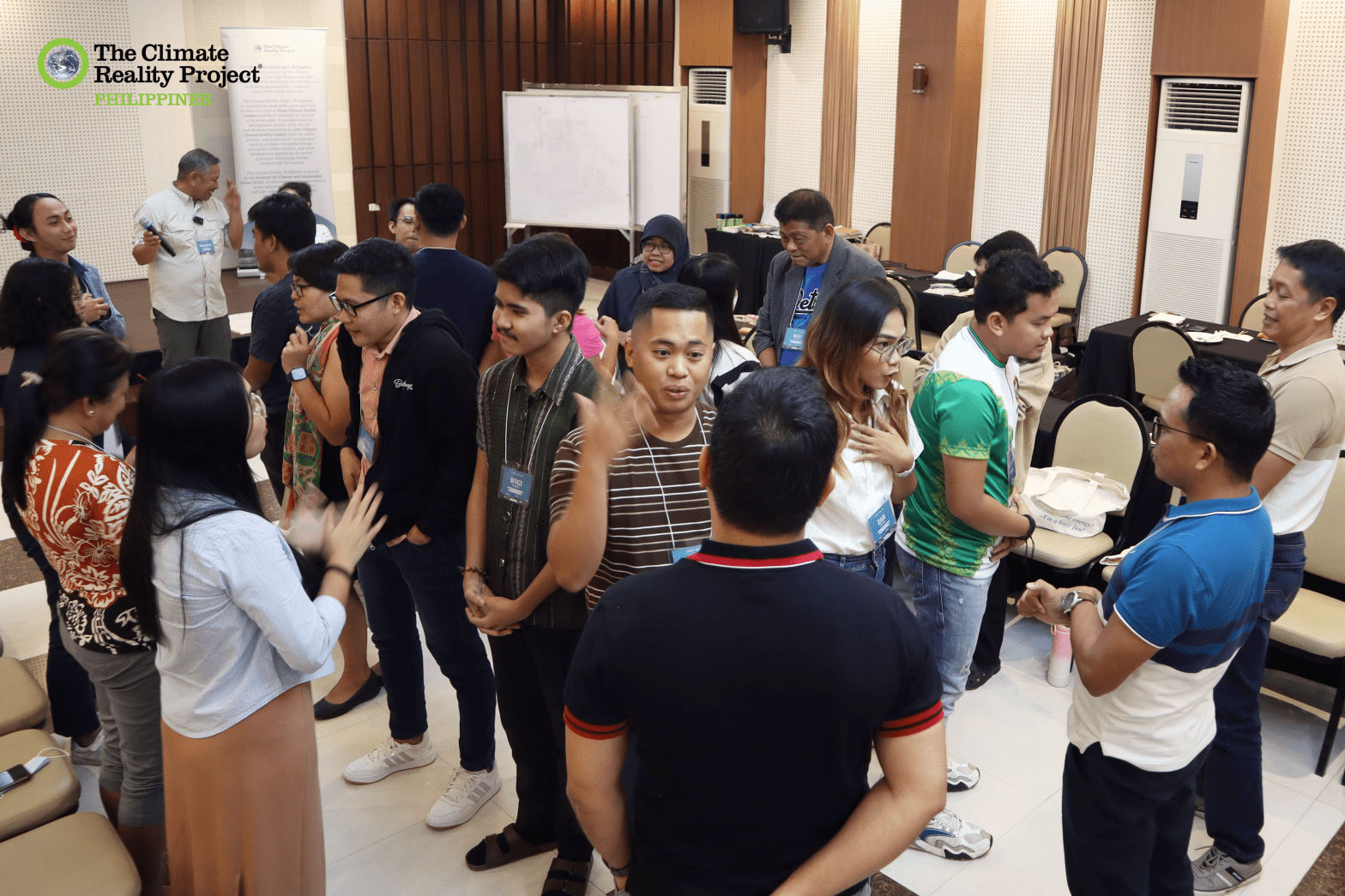
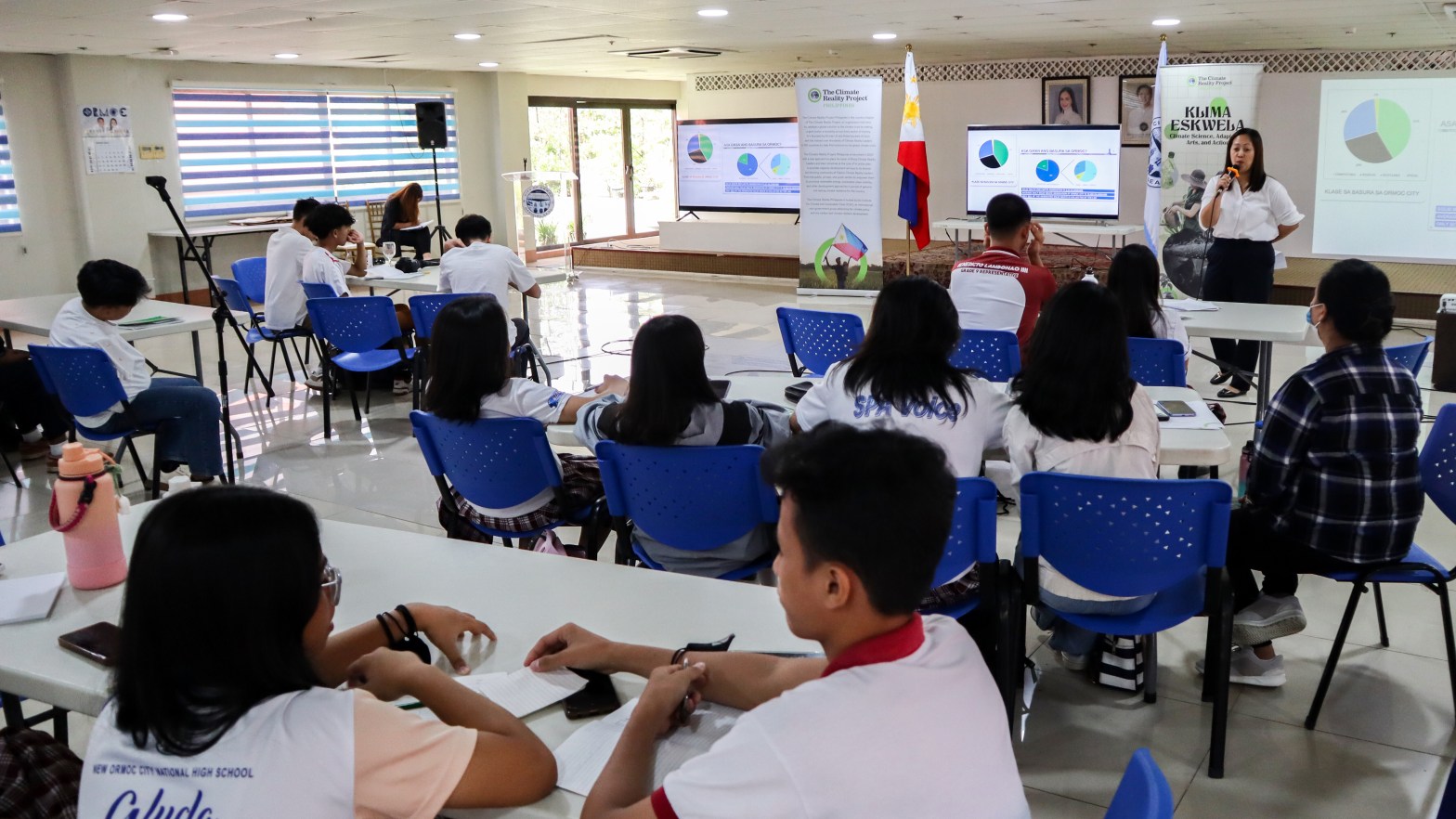
The Climate Reality Philippines completed the Visayas leg of REalTalk, held on 27-30 July 2023 in Ormoc City, Leyte, mobilizing 30 GEOP participants from the academe, local governments, and civil society organizations. The movement-building workshop on renewable energy is organized in partnership with AktivAsia Philippines, a non-profit organization that supports organizers and activists in Asia to win energy campaigns.

Climate Reality Leaders and energy advocates underwent REalTalk workshop to hone their leadership and campaign skills instrumental to cascading GEOP implementation in their respective areas.

REalTalk advances the movement for cheaper, cleaner, and more reliable energy access in the provinces by supporting entities to switch to  100% renewable energy through GEOP.

“GEOP disrupts the energy landscape that heavily relies on fossil fuels, as it allows entities to source 100% power from renewable energy. GEOP reduces generation charges for its users because generating power from renewable energy is significantly cheaper than from fossil fuels, resulting in savings on electricity costs,” Christian Soqueño, the RE Energize PH Campaign Lead of Climate Reality PH, said.

GEOP advances just renewable energy transition

In his 2023 State of the Nation Address, President Ferdinand Marcos, Jr. expressed that renewable energy is the way forward for the country’s energy sector. As a mechanism under the Renewable Energy Act, GEOP supports this pronouncement and the government’s goal to increase the share of renewable energy in the country’s power generation mix to 35% by 2030 and to 50% by 2040.
Visayas in-person REalTalk training facilitated a deep dive session on the Philippine power industry to demonstrate how GEOP is a game-changer in the current energy landscape.

The Climate Reality Philippines supports the implementation of GEOP across the country through REalTalk to empower and mobilize more campaigners who can champion the movement towards just renewable energy transition.

“We are considering GEOP as a mechanism to advance this movement. We need the public and private entities who perform bulk of industrial and economic operations, to make bigger steps in giving credence to renewable energy,” Nazrin Camille Castro, the Branch Manager of Climate Reality Philippines, emphasized.

Regional campaigners identified potential eligible GEOP end-users who could make the switch to renewable energy, as a means to address expensive electricity rates across the region.

Switching local government units and public state university through GEOP  

The Visayas leg of REalTalk workshop produced five (5) different campaign plans, each aiming to register four (4) local government units and one (1) state university in GEOP.
 
Regional campaigners developed key messages anchored on the motivational analysis tool and formulated strategies and tactics needed to convince their priority stakeholder to consider GEOP.

Reports of rotational power outages due to manual load dropping and system disturbances despite electricity rate surges remain in the region. Participants identified GEOP as a game changer that can help address soaring power costs and outages.

REalTalk Visayas had a site visit to the Tongonan Geothermal Power Plant in Ormoc City, Leyte. The participants learned about the history, installed capacity, serviceable area, and generation charges of the power plant.

Renewable energy, compared to imported fossil fuels, has cheaper generation charges because they are domestically abundant. Renewable energy suppliers participating in GEOP offer cheaper electricity prices compared to average generation charges set by distribution utilities.

Tongonan Geothermal Power Plant, registered as a renewable energy supplier under Green Core Geothermal Inc., revealed that their generation rates are at P4.00/kWh, which is significantly lower than the over P10.00 – P18.00/kWh charges from distribution utilities in the region, as shared by the participants.

The Tongonan Geothermal Power Plant is the largest wet steam field in the Philippines located within a 107,625-hectare reservation for forest area and power complex. The site boasts of negative carbon emission for harnessing power from geothermal energy, alongside its forest and wildlife protection initiatives.

REalTalk is a training program focused on raising energy literacy and building a movement on just transition to renewable energy. The last cohort is slated for September this year in Cagayan de Oro City.

***